How the Ukraine War Reshaped Global Alliances and Diplomacy
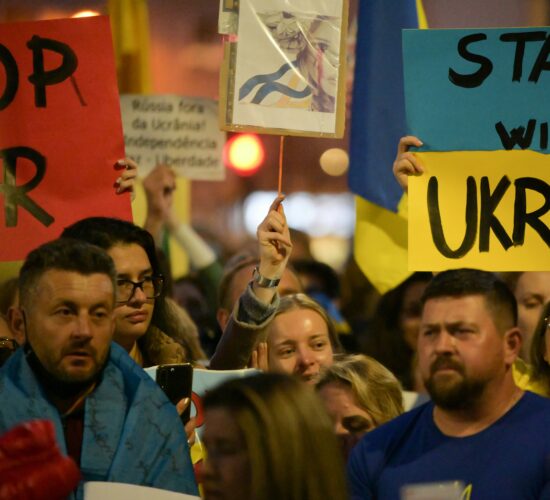
The Ukraine war changed the security landscape across Europe. Russia’s full-scale invasion in February 2022 pushed governments to rethink assumptions that major interstate war had become unlikely on the continent. Defense planning gained new urgency, especially in countries near Russia. Governments increased military readiness, reviewed critical infrastructure, and placed greater attention on cyber threats, air defense, ammunition supplies, and the ability to respond quickly to future crises.
NATO also strengthened its defense posture along its eastern flank. The alliance describes Russia’s war against Ukraine as the gravest threat to Euro-Atlantic security in decades. It has increased forces in eastern member states and developed broader defense plans. These steps show how the conflict has moved security back toward the center of European foreign policy.
NATO Took on Greater Strategic Importance
The war gave NATO a more visible role in European security. Member countries expanded military cooperation while providing weapons, training, financial assistance, and other forms of support to Ukraine. NATO says its members provide the overwhelming majority of military aid delivered to Ukraine. The alliance has also built new programs aimed at training, coordination, rehabilitation, innovation, and lessons from the battlefield.
The relationship between Ukraine and NATO has therefore grown much closer, although Ukraine remains outside the alliance. NATO members have stated that Ukraine has the right to choose its own security arrangements and have repeatedly supported its Euro-Atlantic integration. At the 2026 Ankara Summit, allies also committed major resources for Ukrainian military equipment, assistance, and training, showing that the war has created long-term security commitments rather than only emergency responses.
The European Union Expanded Its Foreign Policy Role
The conflict also pushed the European Union to act more strongly in areas of security and foreign policy. EU members adopted sanctions against Russia, provided economic and military support to Ukraine, and worked to reduce strategic vulnerabilities. The war encouraged closer coordination between the EU and NATO because many countries belong to both organizations. Their cooperation now includes defense capabilities, crisis management, resilience, and responses to hybrid threats.
Ukraine’s relationship with the EU has changed as well. The country received candidate status and moved forward with formal accession negotiations. In July 2026, the EU opened negotiations covering external relations, foreign policy, security, and defense. Membership remains a demanding process, but the negotiations show how the war has drawn Ukraine more closely toward European political and economic institutions.
Relations With Russia Became More Confrontational
Russia’s ties with many Western governments deteriorated sharply after the invasion. Sanctions, diplomatic restrictions, military aid to Ukraine, and reduced economic cooperation changed relationships that had developed over several decades. European countries also began reducing dependence on Russian energy and examining other areas where economic connections could create security risks. The result has been a deeper separation between Russia and much of Europe.
At the same time, military and political communication remains necessary. Russia is a nuclear power, a permanent member of the United Nations Security Council, and an important actor in international security. Governments therefore face two competing needs. They want to deter further aggression while keeping channels available for diplomacy, arms control, humanitarian matters, prisoner exchanges, and possible negotiations. This tension has become a defining feature of international relations surrounding the war.
China and Other Powers Gained Greater Attention
The Ukraine war also affected how governments view China’s global role. China has maintained important economic and political ties with Russia while presenting itself as supportive of diplomatic efforts. Western governments have closely watched Chinese trade with Russia and Beijing’s positions on sovereignty, sanctions, and negotiations. This has connected the Ukraine conflict with wider debates about strategic competition between major powers.
Other countries have avoided fully aligning with either Russia or Western governments. Nations across Asia, Africa, Latin America, and the Middle East often assess the conflict through their own security, trade, food, energy, and diplomatic interests. Some have supported United Nations resolutions related to Ukraine while avoiding Western sanctions. These varied responses show that the international system does not divide neatly into two fixed camps.
Global Institutions Faced New Pressure
The conflict exposed limits within international institutions. The United Nations remains an important forum for diplomacy and humanitarian coordination, yet divisions among major powers make agreement difficult. Russia’s permanent seat and veto power on the Security Council create major limits when the council addresses matters involving Russia itself. The broader debate has renewed questions about whether global institutions reflect current political realities.
At the same time, international forums remain valuable because countries with very different positions still need places to communicate. The United Nations General Assembly, regional organizations, and diplomatic summits allow governments to discuss humanitarian issues, nuclear safety, food security, energy markets, and possible paths toward ending hostilities. Current global tensions have also increased calls for reforms that could make international institutions more effective.
International Relations Are Becoming More Complex
One lasting impact of the Ukraine war is a stronger focus on alliances, defense production, regional cooperation, and economic security. Countries increasingly examine whether supply chains, energy sources, technologies, and infrastructure could create strategic dependence. European governments have also placed more emphasis on building defense capacity, while NATO members continue debating how military responsibilities and costs should be shared across the alliance.
The war has therefore influenced far more than relations among Russia, Ukraine, Europe, and the United States. It has shaped debates about sovereignty, deterrence, sanctions, alliances, global institutions, and the balance of power. Its final long-term impact will depend partly on how the conflict ends and what security arrangements follow. Even so, international relations already look different because governments now approach security, economic ties, and diplomatic partnerships with greater caution.
Additional Information
- Blogs
- balance of power, economic cooperation
- Alexander Rekeda